
Cowboys vs Farmers in Product Orgs
By Dennis Chow · 7 min read
I've worked with a PM who could ship three features in the time it took most teams to finish a kick-off meeting. I've also worked with a PM who spent six weeks building a pricing model that's still running the business three years later.
Neither approach is wrong. But put them on the same team without understanding what you're doing, and you'll get chaos.
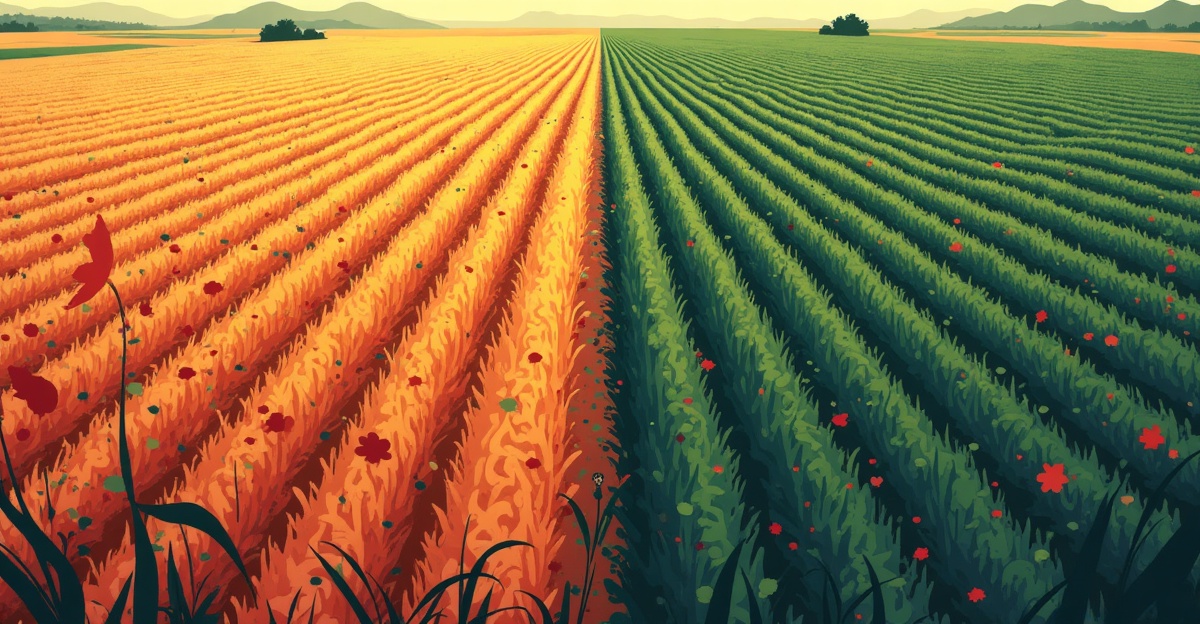
Product teams tend to split into two types: Cowboys and Farmers. The Cowboys move fast, test boldly, and leave a trail of experiments behind them. The Farmers build systems, optimize processes, and cultivate sustainable growth. Most product orgs need both. The trick is knowing when you need which one — and how to keep them from killing each other.
What Are Cowboys and Farmers in Product Management?
The metaphor comes from early-stage startup dynamics, but it maps cleanly to product management team structure.
Cowboys are PMs who thrive in ambiguity. They're the ones who ship before the spec is done, launch features to 5% of users just to see what happens, and treat roadmaps as suggestions rather than commitments. They're comfortable making decisions with incomplete data because waiting for complete data means missing the window.
Farmers are PMs who build for scale. They create frameworks, define processes, and turn one-off wins into repeatable systems. They're the ones who document why a decision was made, build dashboards that actually get used, and think in terms of sustainable growth rather than quarterly spikes.
Neither type is better. They're optimized for different problems.
The Cowboy finds product-market fit. The Farmer scales it. The Cowboy discovers what works. The Farmer makes it work reliably. You need both, but at different times — and the conflict happens when your org structure doesn't match the problem you're solving.
The Cowboy Mindset: When Speed and Experimentation Win
Cowboys win in three scenarios:
1. You're pre-product-market fit. Nothing matters except finding what resonates. A Cowboy PM will ship five half-baked versions of a feature to different customer segments in a month. Most will fail. One will work. That's the game.
I watched a Cowboy PM at a B2B startup test seven different onboarding flows in six weeks by literally changing the signup page every Monday. Product ops hated it. The CEO loved it. Conversion jumped 40% by week five, and we finally understood which value prop actually landed.
2. You're entering a new market. All your existing playbooks are useless. You need someone willing to ignore the process doc and try things that feel wrong. Cowboys don't need permission. They ship, measure, learn, and move on before most teams finish their A/B test plan.
3. You're facing an existential threat. When a competitor launches something that could kill you, or a regulation changes the game overnight, you need someone who can move without a roadmap. Cowboys skip the alignment meetings and fix the problem.
The weakness: Cowboys don't scale. They create technical debt, skip documentation, and build features that work brilliantly for one customer but break for everyone else. Let a Cowboy run unchecked for too long, and you'll have a product that feels like six different products duct-taped together.
The Farmer Mindset: Why Systematic Cultivation Matters
Farmers are your post-PMF secret weapon.
They're the PMs who take your scrappy early win and turn it into a revenue engine. They build the infrastructure that lets you grow from 100 customers to 10,000 without the product falling apart.
Farmers excel when:
You've found PMF and need to scale it. Once you know what works, you need someone to make it work consistently. That means building systems, creating templates, documenting processes. A Farmer PM will turn your messy discovery into a repeatable motion.
You're managing a mature product. If your product has been around for years and serves thousands of customers, Cowboy energy will destroy trust. You need a PM who thinks about edge cases, backward compatibility, and not breaking what's already working. Farmers own this.
You're building platform or infrastructure. Anything that other teams depend on needs Farmer thinking. You can't move fast and break things when "things" means your entire company's ability to ship. Farmers build the foundations that let Cowboys run wild elsewhere.
The best Farmer PM I know spent four months building a product operations framework that let our team cut planning cycles from three weeks to three days. Unglamorous work. Saved us hundreds of hours over the next two years.
The weakness: Farmers in the wrong context will optimize you into irrelevance. They'll build beautiful process while competitors ship. They'll wait for data that never comes. They'll schedule a meeting to discuss whether to schedule another meeting.
Why Most Product Teams Need Both (And When They Don't)
Here's what I've seen work:
Stage-based allocation. Early stage companies (pre-PMF, <$5M ARR) should be 80% Cowboys, 20% Farmers. You need speed, you need experiments, you need people who won't get paralyzed by ambiguity. The Farmers you do have should focus on the few things that absolutely must scale — usually data infrastructure and customer insights.
Problem-based allocation. Once you hit PMF, your product team organization shifts. Core product gets Farmers. New bets get Cowboys. Platform and infrastructure get Farmers. Geographic expansion gets Cowboys. Match the mindset to the problem.
Rotation systems. Some teams rotate PMs through Cowboy and Farmer roles every 12-18 months. This only works if you hire people who can do both — rare, but worth it. Most PMs have a natural mode. Let them play to their strengths.
The conflict happens when you don't make the distinction explicit. A Farmer PM will slow down a zero-to-one initiative. A Cowboy PM will create chaos in a scaling product. Make the role expectations clear in your product manager roles and responsibilities from day one.
Building a Balanced Product Team Structure
Three rules I follow:
1. Staff the problem, not the org chart. Don't hire for "Senior PM." Hire for "Senior PM to find PMF in enterprise" (Cowboy) or "Senior PM to scale self-serve motion" (Farmer). The problem dictates the profile.
2. Create explicit handoffs. If a Cowboy finds something that works, they should hand it to a Farmer to scale. Make this a celebrated transition, not a demotion. "You proved it works. Now someone else makes it work at scale. Next experiment is waiting."
3. Protect both from the other's antibodies. Cowboys will mock Farmers for moving slowly. Farmers will criticize Cowboys for creating technical debt. Your job as a product leader is to make both approaches legitimate. Sometimes you need to tell the Farmers to back off. Sometimes you need to make the Cowboys clean up their mess.
How to Align Cowboys and Farmers Around Product Narratives
The biggest failure mode: Cowboys and Farmers can't communicate with each other or with leadership.
Cowboys speak in anecdotes and momentum. Farmers speak in frameworks and metrics. Leadership needs a coherent story that acknowledges both.
This is where most product teams waste the most time — rebuilding context every time they need to align stakeholders. Your Cowboy PM just ran five experiments. Your Farmer PM just optimized checkout flow for the seventh time this quarter. The CEO wants to know what the product team is doing and why it matters.
The answer isn't more meetings. It's better narratives. Take the scattered insights — the experiment results, the optimization wins, the customer feedback, the usage data — and pull it into one coherent story. Not because it makes pretty slides. Because it creates the shared context that lets Cowboys and Farmers actually work together instead of past each other.
Both types of PMs know what they're doing and why. Getting it out of their heads and into a format the rest of the organization can align on — that's the expensive part. And that's exactly the problem Lodestone solves: it takes what your PMs already know and turns it into the narrative layer your stakeholders actually need.
Your product team has both Cowboys and Farmers. Make sure they're solving the right problems, at the right time, and telling a story everyone can follow.